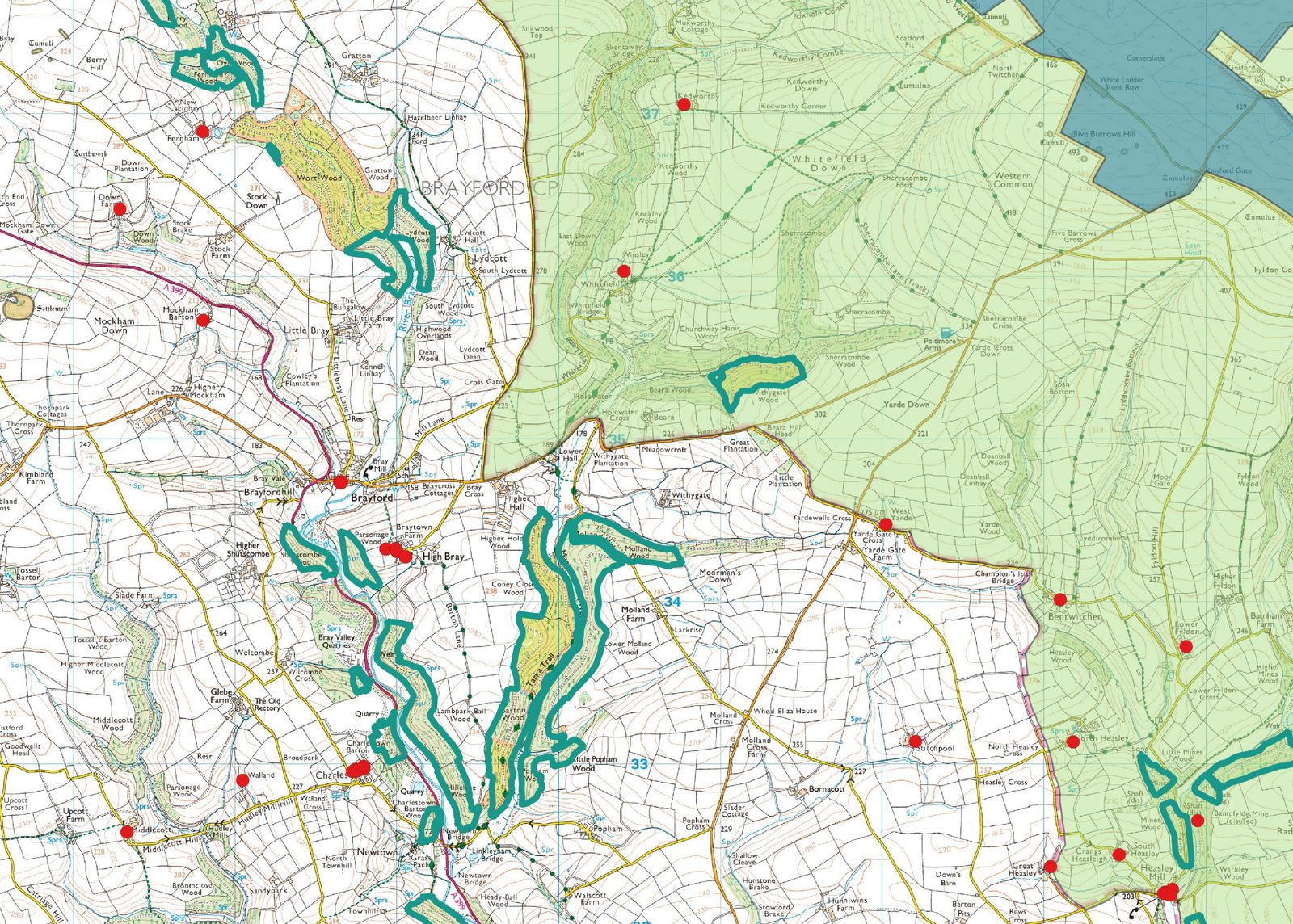
At their core, both LVIA (Landscape and Visual Impact Assessment) and LVA (Landscape and Visual Appraisal) aim to evaluate how proposed developments affect landscape character and visual amenity. However, there are meaningful distinctions that are well-recognised in professional guidance.
Scope and formality
- LVIA is the more comprehensive and formal of the two. It can be undertaken as part of an Environmental Impact Assessment (EIA) and in this context it must assess the 'significance' of landscape and visual effects, including types, duration, and geographic extent.
- LVA, by contrast, is generally used for smaller or less complex projects, as part of pre-application discussions. It is more informal and does not require a formal judgement of significance.
Typical use cases
- LVIA is required in larger schemes — especially those with landscape and visual implications — or those specifically falling under EIA thresholds. It may accompany an Environmental Statement detailing effects across phases (e.g. construction, Year 1, Year 15) and cumulative scenarios.
- LVA is more suited to less sensitive contexts or for preliminary stages, providing a baseline understanding of landscape sensitivity. It can be valuable during pre-application or plan-making stages when the intention is to explore locational or design considerations before a fixed scheme is developed.
Process and outputs
The two may share common preparatory steps — desk studies, site visits, identification of receptors — but an LVIA, particularly for EIA, goes into far greater depth: it includes assessments at specific stages, structured impact tables, cumulative and long-term analysis; whereas a standalone LVIA and LVA focuses more on sensitivity and opportunities without such formal rigour.
Additionally, the Landscape Institute’s Technical Guidance Note (TGN 1/20) emphasises: "an LVIA must explicitly identify significant effects in compliance with EIA Regulation, whereas LVA does not require such a judgement."
Recent clarifications (August 2024)
The latest guidance reaffirms that both LVAs and LVIAs serve to articulate landscape professionals’ judgment, but that LVIA is the formal mechanism for conveying importance and magnitude of effects to decision-makers. Importantly, the updated Technical Guidance Note (LITGN-2024-01, August 2024) instructs professionals to account for seasonal variation in landscape and views — such as capturing winter views — but neither LVA nor LVIA is excluded from this requirement.
Summary of differences
In essence:
- LVIA is the rigorous, structured assessment required — especially for developments requiring EIA — explicitly evaluates significance of effects, and follows detailed regulatory and methodological requirements.
- LVA is the lighter-touch equivalent, used in lower-impact or preliminary contexts, reporting on landscape and visual sensitivity without formal significance judgement.
Need help on a specific project?
If you are working on a development that requires landscape and visual evidence, we can help. Tell us about your site and we will respond with a fixed fee and programme within one working day.