The brief
The Landscape Workshop was commissioned to prepare a Townscape and Visual Impact Assessment in support of a planning application for a mixed-use redevelopment scheme in the central area of Gravesend, on the south bank of the Thames in north Kent. The proposal replaces a previously underused site in the town centre with a permanent piece of built form, contributing to a wider regeneration story for this part of the town.
The challenge was specifically townscape, not landscape — a tightly woven historic urban setting hemmed in by four Conservation Areas, several Grade II listed buildings, the borough’s Civic Centre and council offices, and an emerging cluster of taller modern buildings on the wider Gravesend skyline. The TVIA had to make an honest, evidence-based case that a thoughtfully designed scheme could sit comfortably within this context without harming the character or significance of the heritage assets around it.
The townscape and visual context
Gravesend’s importance lies in its position as the first main stop down the Thames from London — its historic core has Roman and medieval origins, and the town’s 19th-century commercial expansion produced the tightly packed, layered urban fabric that defines its central streets today. The site sits within easy walking distance of the King Street, High Street and Queen Street, Upper Windmill Street and Windmill Hill Conservation Areas, with listed buildings including the Public Library, the County Court, several historic churches and the railway station all nearby. Beyond the immediate streetscape, the wider townscape is shaped by an evolving height profile that already includes a number of taller civic and residential buildings.
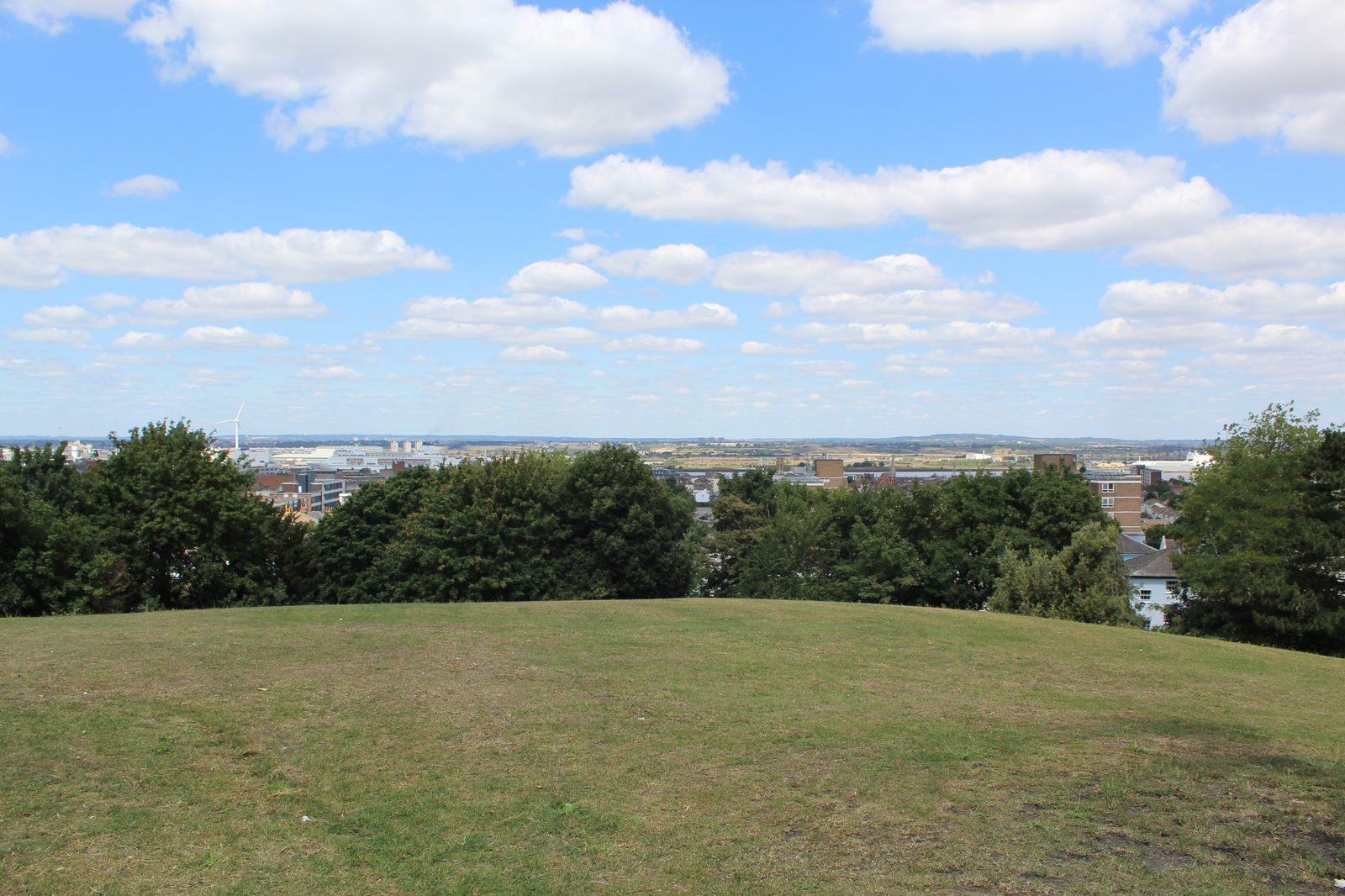
Seven representative viewpoints were agreed in consultation with the local planning authority before the assessment began. These ranged from a long-distance view from Windmill Hill Park to the south, through several short-distance street-level views around the immediate site, to a long-distance view from Tilbury Fort on the northern bank of the Thames — a high-sensitivity heritage receptor that gave the assessment its widest test of effects on the wider Gravesend skyline. Two site visits were undertaken, in summer and again in winter, with photography taken in accordance with Landscape Institute Technical Guidance Note 06/19 (Type 3: Photomontage / Photowire). Wireframe model views were prepared by the design team to support the visual analysis at each agreed viewpoint.
Our approach
City and town centre TVIA work is a different conversation to rural LVIA. The defining issues here were the close proximity of multiple Conservation Areas, the setting of the Grade II listed buildings, the relationship of the proposal to the existing and emerging height profile of the Gravesend skyline, and the way the new building would read at street level from the surrounding pedestrianised streets and key vehicular routes into the town centre. We worked through each viewpoint individually, taking the wireframe model as the starting point for the visual analysis, then applied the GLVIA3 sensitivity / magnitude / significance framework to each receptor in turn.
Mitigation and design response
Mitigation in this kind of work is largely an architectural conversation rather than a planting conversation. We worked closely with the design team so that the scheme’s massing, scale and material palette responded directly to the immediate townscape context: building forms broken into blocks whose proportions reflect the rhythm and scale of surrounding streets, careful calibration of any taller element against the existing and emerging cluster of tall buildings on the wider skyline, and a sensitive lower-scale frontage stepping down to the lower terraces of the adjacent streets. Materials and detailing were chosen to complement the existing buildings rather than mimic them, and existing and proposed street trees were retained or added to integrate the building into its surroundings at pedestrian level.
The outcome
This is one of those cases where the findings were largely beneficial. The assessment concluded a minor positive effect on the listed buildings around the site — no listed building would be physically changed and the scheme would improve the surrounding design quality and environment. The same minor positive finding applied to the four surrounding Conservation Areas: although a substantial new element would be introduced into their wider setting, it would be clearly distinguishable from the historic townscape, would not physically alter the conservation areas themselves, and would actively complete a previously underused gap in the urban fabric. Topography and building heights came out as a moderate positive effect, with the new building reading as a coherent addition to the existing and emerging height profile rather than as a discordant intrusion. Site fabric and land use both returned moderate positive findings, recognising the substantive uplift from replacing an underused surface use with a permanent piece of integrated townscape.
Visually, all seven viewpoints returned beneficial effects. The two long-distance views — from Windmill Hill to the south and from Tilbury Fort across the Thames to the north — came out as moderate beneficial, with the assessment noting that, when read against the wider cluster of approved tall buildings emerging on the Gravesend skyline, the proposal was actually the least dominant in mass and height of the new buildings shown in the model. The five close-range street viewpoints came out as minor beneficial, with the new building introducing a coherent contemporary built element that improved each existing view’s character and composition. The TVIA gave the design team and the planning case a clear, evidence-led narrative: a sensitive contemporary intervention that respects the heritage setting, completes the urban fabric and reinforces — rather than disrupts — the gradual regeneration of this part of the town centre.
Working on a similar project?
If you are preparing a planning application that needs landscape and visual evidence — from a single dwelling to a major EIA scheme — we can help. Tell us about your site and we will respond with a fixed fee and programme within one working day.