Photographs, photomontages, wirelines and verified views are not just illustrative tools — they are integral to understanding how a proposed development may appear in the real world and how it might affect visual amenity.
However, not all visualisations are created equal. The Landscape Institute’s Technical Guidance Note 06/19 (TGN 06/19) — Visual Representation of Development Proposals — was introduced to bring clarity, consistency and reliability to the way these images are produced and used.
Overview of TGN 06/19: raising the standard
Technical Guidance Note 06/19, published by the Landscape Institute in September 2019, sets out detailed expectations for how visual representations should be prepared and presented as part of a planning submission. It does not mandate a single method, but rather promotes fitness for purpose, encouraging practitioners to choose the level of technical rigour required depending on context, sensitivity, and scale.
Key principles of TGN 06/19 include:
- Clarity: Visual materials must clearly state what they show, how they were produced, and which assumptions were made.
- Consistency: Viewpoints, lenses, and image scales must be standardised and replicable.
- Verification: Viewpoints and visualisations must be reproducible on site and open to third-party validation.
It is also explicit about the need to distinguish between illustrative, accurate, and fully verified views — each having different levels of reliability and appropriate use.
Types of visualisation
1. Type 1: Annotated viewpoint photograph
These are high-quality, full-frame images taken from selected viewpoints around the site. TGN 06/19 specifies that:
- Aims to represent context and outline or extent of development and of key features.
- Photographs must be taken using a fixed focal length lens, typically 50mm equivalent (on full-frame) to reflect the natural field of view.
- Metadata (date, time, weather conditions, camera model) must be provided.
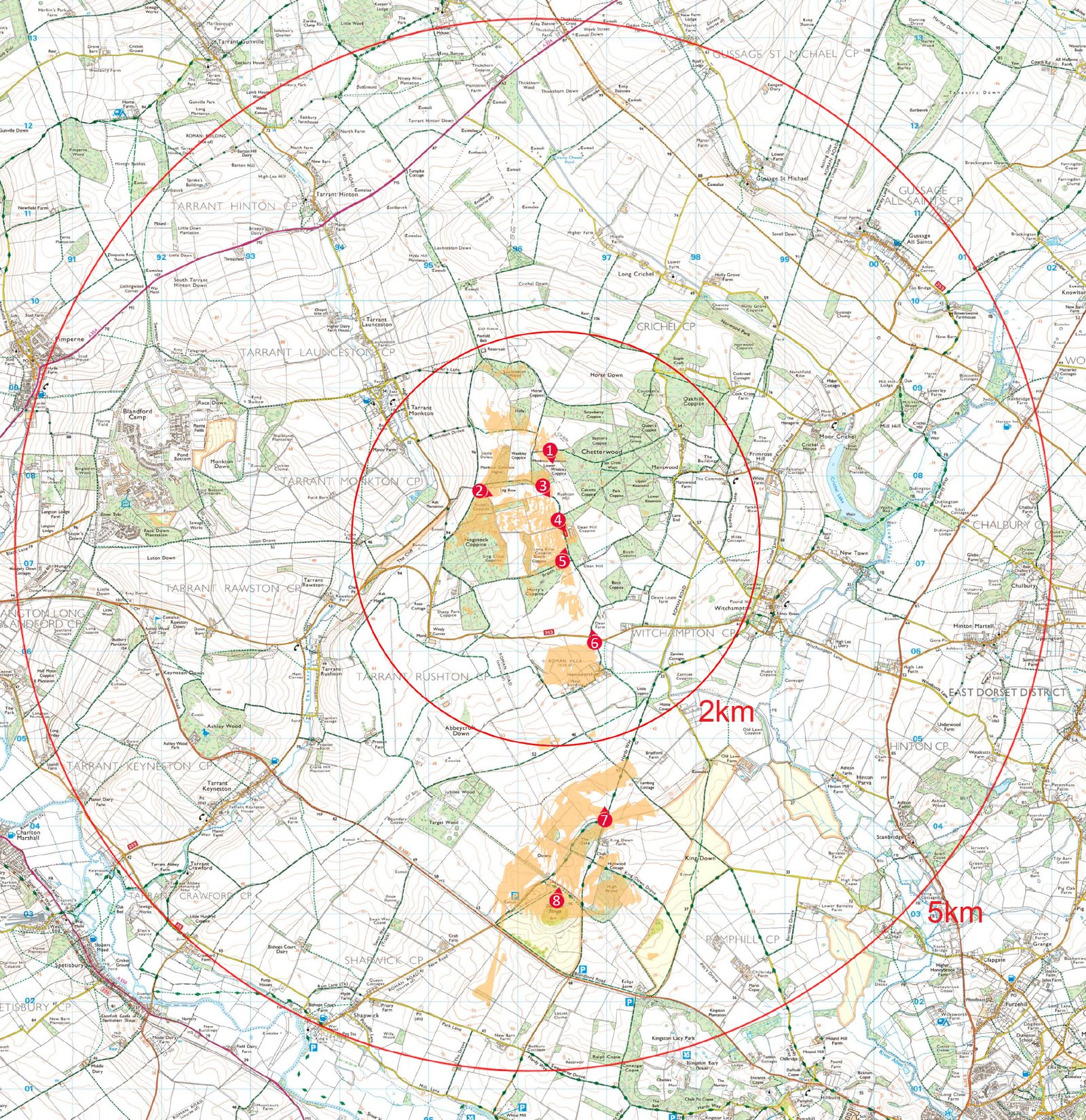
- GPS, OS Maps and geo-referenced aerial photography supporting the viewpoint location.
- Tripod recommended but discretionary.
2. Wirelines
Wirelines are skeletal digital renderings of a proposed development, overlaid onto a baseline photograph or terrain model. They show the form and location of a scheme without surface texture or colour.
Wirelines are particularly useful for:
- Early design testing.
- Schemes involving multiple structures (e.g. wind turbines or solar arrays).
- Establishing potential visibility without finalised materials.
Their neutrality makes them ideal for transparent discussion, though they may understate the eventual visual prominence of a development if not accompanied by context or colour.
3. Photomontages
Photomontages represent a full visual simulation — a composite image that integrates a rendered model of the proposal into the baseline photograph, using lighting, texture, and surface detail. They are commonly used as part of evidence submitted to public inquiry, most planning applications accompanied by an LVIA (as part of formal EIA), and some non-EIA (LVA) developments which are contrary to policy or likely to be contentious.
When produced correctly, photomontages can be extremely powerful. They allow viewers to understand:
- The realistic visual presence of the proposal.
- Its interaction with existing landscape features.
- Potential design mitigation (e.g. materials or planting).
TGN 06/19 recommends that photomontages used in formal LVIA work must adhere to a documented methodology, including camera calibration, 3D modelling accuracy, and horizon alignment.
4. Verified views
Sometimes referred to as Accurate Visual Representations (AVRs), verified views are the highest standard of visual representation. They combine baseline photography, digital terrain modelling, and precise rendering to produce an image that is independently reproducible and legally defensible.
Verified views are essential in:
- High-profile or controversial schemes.
- Schemes within or near designated landscapes, heritage assets, or strategic viewpoints.
- Public inquiries or planning appeals.
TGN 06/19 sets clear expectations for verified views, including:
- Accurate terrain and camera matching.
- Georeferenced data from surveyed positions.
- Transparent explanation of modelling assumptions and rendering parameters.
Importantly, verified views must be accompanied by a methodology statement, often reviewed by the local planning authority or an independent third party.
Need help on a specific project?
If you are working on a development that requires landscape and visual evidence, we can help. Tell us about your site and we will respond with a fixed fee and programme within one working day.