The brief
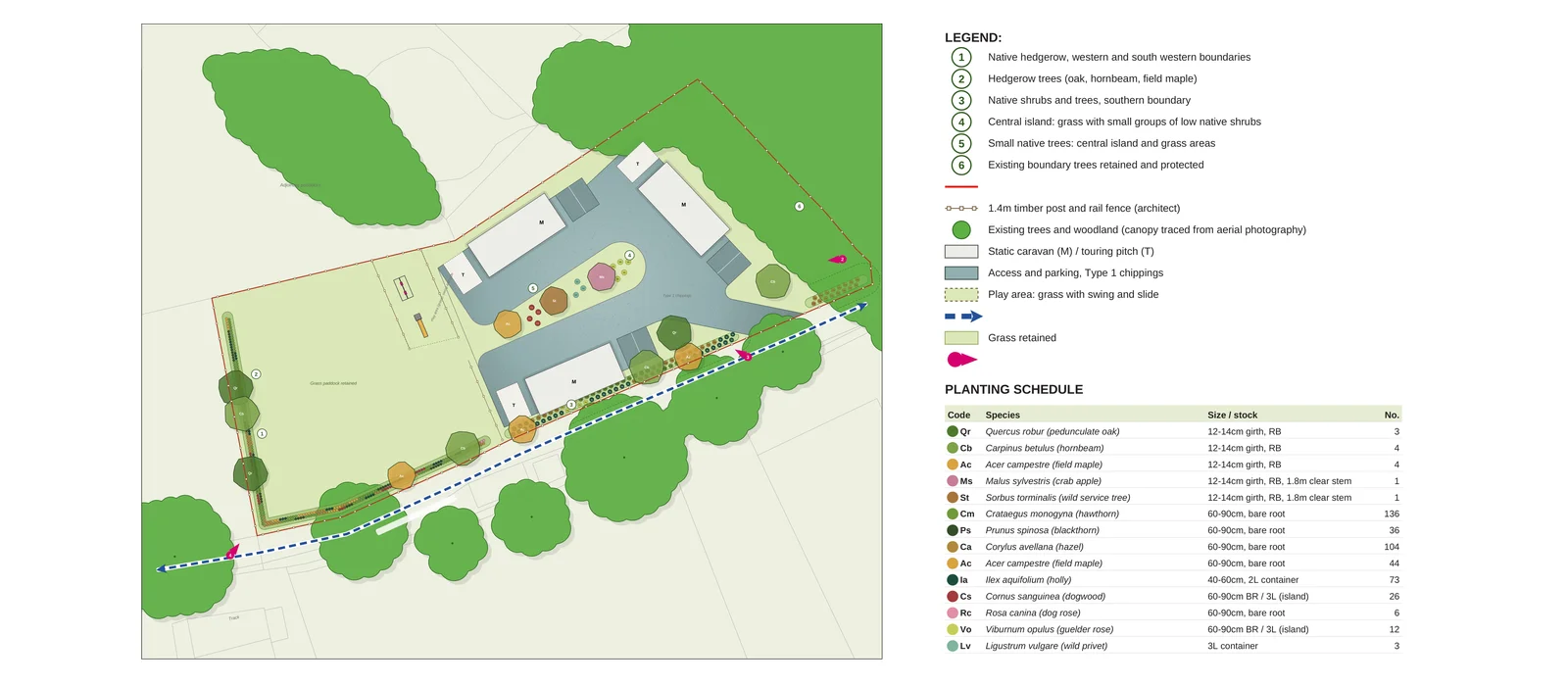
We prepared a Landscape and Visual Appraisal and an accompanying landscape mitigation plan for a small site with static caravans, touring pitches, access and parking, and a play area, set in wooded farmland. A public footpath runs along one boundary, and the appraisal identified views from that footpath and from the site entrance as the ones that mattered most. The mitigation plan needed to respond directly to those findings.
Our approach
We tied each planting element to the viewpoint it addresses, so the planning officer can see exactly how the mitigation answers the appraisal. A new native hedgerow of around 68 m, with nearly 340 plants of hawthorn, blackthorn, hazel, field maple, holly, dogwood and dog rose, runs along the more open boundaries. It filters and contains views from the footpath and the neighbouring paddocks. Oak, hornbeam and field maple hedgerow trees give it height, reflecting the mature, treed field boundaries characteristic of the area.
Along the footpath boundary, where the existing trees stand on the far side of the path, a new belt of native shrubs and trees creates a planted edge between the walkers and the caravans. Inside the site, a rounded central island of grass with small groups of low native shrubs breaks up the view of the access and parking from the entrance. It is kept below 1.5 m so that sightlines stay clear. Small native trees with clear stems, including field maple, wild service tree, crab apple, oak and hornbeam, add a light canopy over the parking and grass areas.
The detail
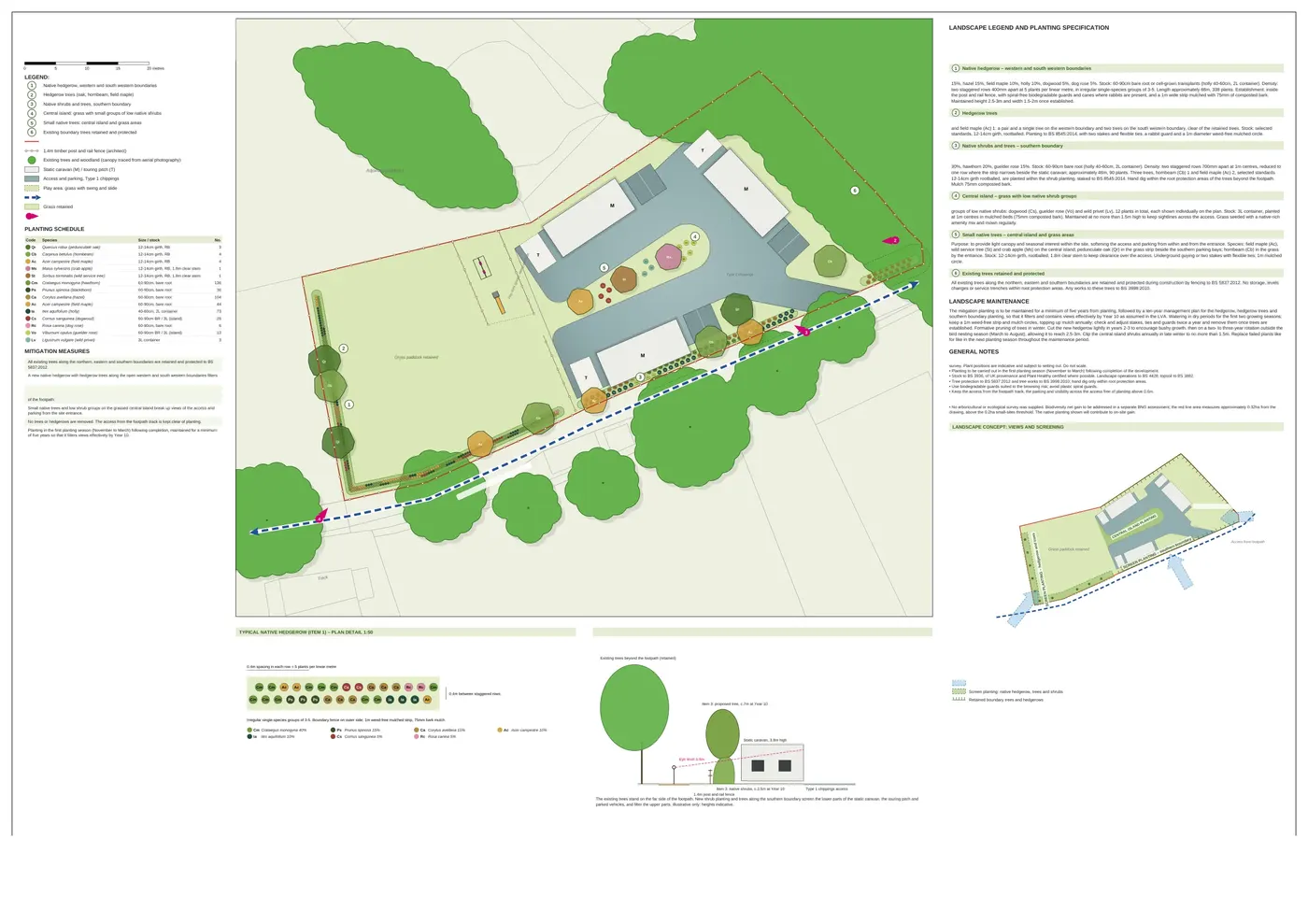
Species were chosen to suit the heavy, seasonally waterlogged clay soils and to reinforce the local hedgerow and oak–hornbeam woodland character. The plan includes:
- a typical hedgerow planting detail;
- an illustrative section from the footpath at Year 10;
- a views-and-screening concept diagram linking the planting to the appraisal viewpoints;
- a full planting schedule.
All existing boundary trees are retained and protected to BS 5837, with hand digging within root protection areas. The mitigation planting is to be maintained for five years, followed by a ten-year management plan for the hedgerow and boundary planting so that it continues to filter views as it matures.
Want to discuss your project?
If you are preparing a planning application that needs landscape evidence — from a single dwelling to a major EIA scheme — we can help. Tell us about your site and we will respond with a fixed fee and programme within one working day.